Blog·
Expansion Joints in Construction: 10 Essential FAQs
Learn why expansion joints are necessary, the main system types, waterproofing and fire-rating requirements, common failures, and maintenance guidance.
Explore by Topic
One reported piece per month. Specifics over theory — installation, compliance, handover, procurement, and design across the projects shaping Saudi Arabia.
Learn why expansion joints are necessary, the main system types, waterproofing and fire-rating requirements, common failures, and maintenance guidance.
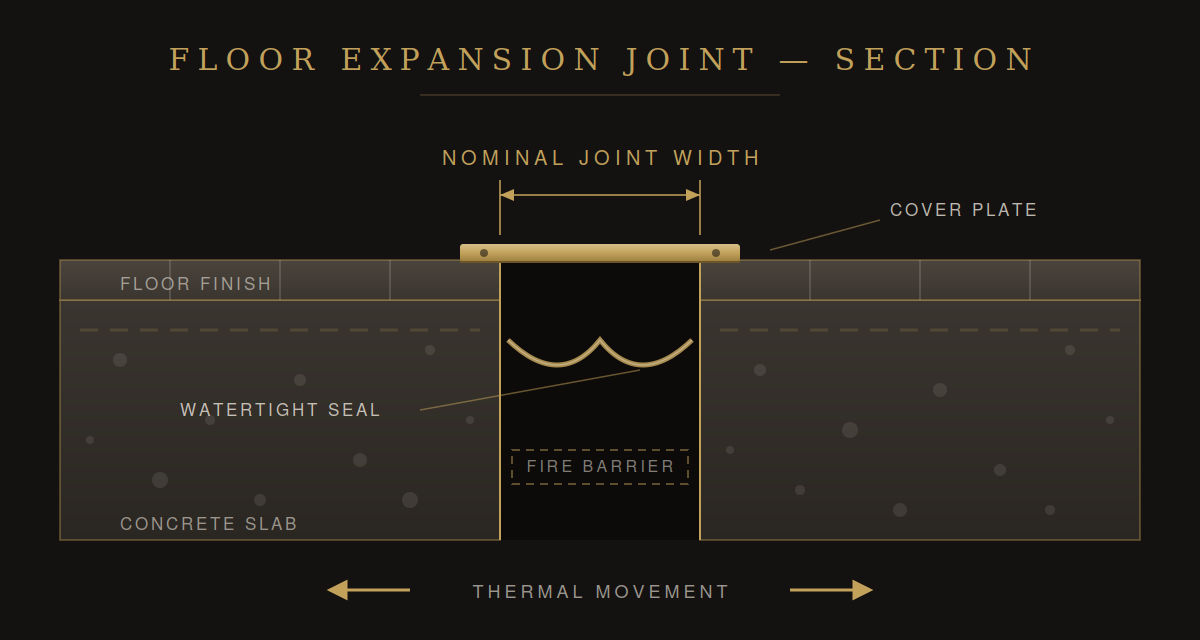
You have seen them a hundred times — a metal or rubber line crossing a mall floor or a car park. Most people think that line is the expansion joint. It is not. This is the foundation: what the joint really is, why the building needs it, and the four factors that decide which system goes in the gap.
A correct expansion joint price starts with five questions about the building. Here they are, in the order we ask them — and the problem each one prevents. If you answer these five in your inquiry, you get a real price from the first time.
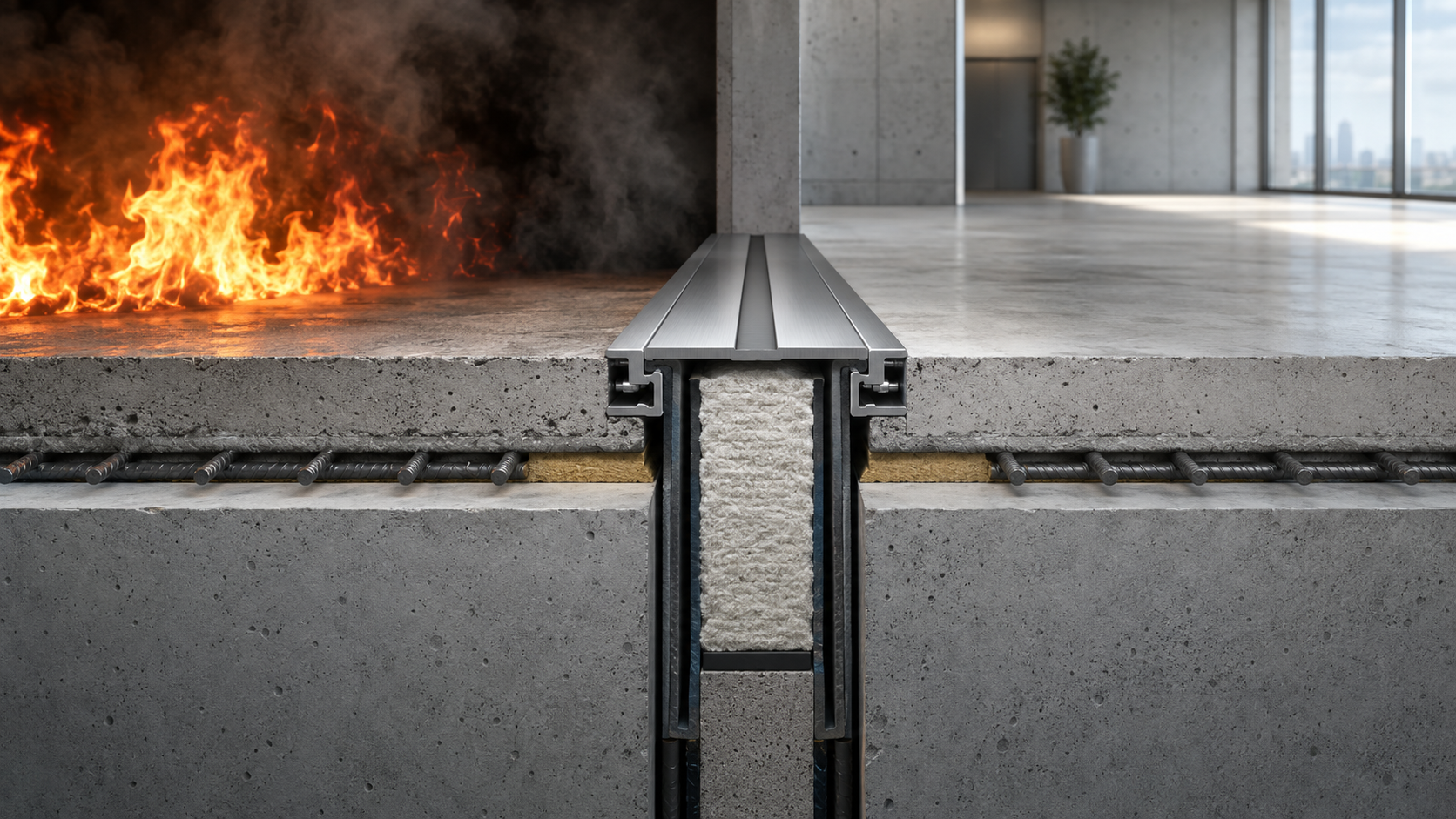
Buildings naturally move due to temperature changes, wind, and settling. Expansion joints allow this movement while preventing cracks and structural damage. However, when a joint passes through a fire-rated wall or floor, it can create a path for smoke, heat, and flames. This article explains how fire-rated expansion joint systems help prevent fire from spreading.